Residential
Gutter systems
Seamless gutters and downspouts sized for the rain we actually get, pitched to drain and hung to carry a winter's load. The job is simple: take the water off the roof and put it somewhere that isn't your foundation.
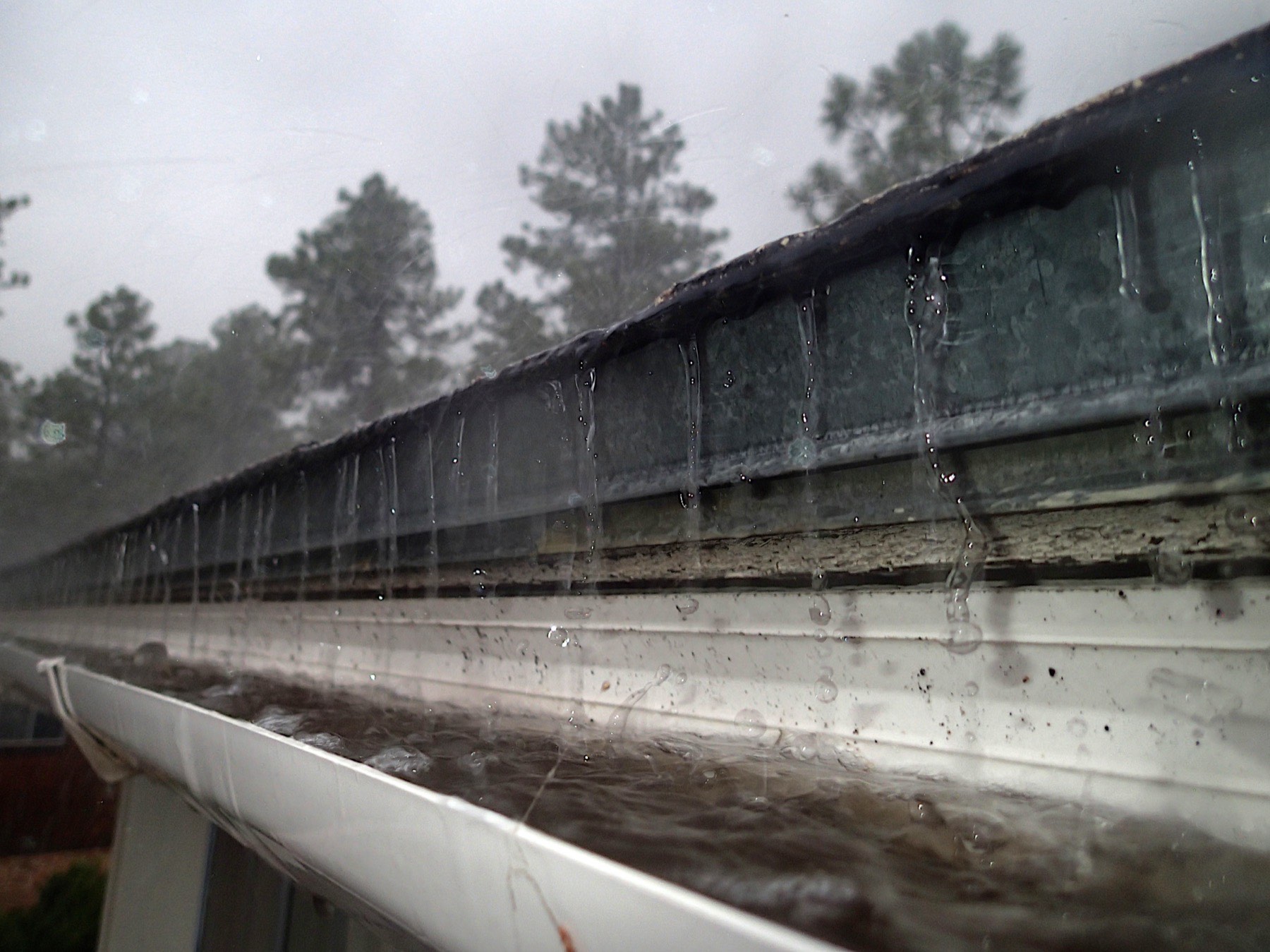
Where the water should go
A gutter is the last few inches of the roof. Most of the gutter problems we're called out for are water getting behind the gutter, spilling over it, or landing next to the foundation. This is the path it should take instead.
-
1. Shingle edge
The first course overhangs the eave a little, so water drops off the shingle instead of curling back underneath it.
-
2. Drip edge
Metal flashing along the edge of the roof deck. It stiffens the edge, keeps water off the deck and fascia, and turns it downward.
-
3. Gutter apron
A second strip of flashing tucked under the shingles and lapped into the gutter. It closes the gap between roof and gutter, so water ends up in the trough, not on the fascia behind it.
-
4. Hidden hanger
A bracket inside the gutter, screwed through the back into the fascia. Nothing shows from the ground, and a screw holds where an old spike works loose.
-
5. K-style gutter
The flat-backed profile on most houses here. The front lip sits a little lower than the back, so if it ever overflows, it spills out the front, away from the house.
-
6. Downspout
Sized to the roof area feeding it, with elbows that bring it back tight to the wall.
-
7. Extension
Carries the water out onto ground that slopes away from the foundation. A downspout that empties at the wall just moves the problem to the crawlspace.
-
8. Fascia
The board the gutter hangs on. If it's soft, it gets replaced before a new gutter goes up; no hanger holds in rotten wood.
Five inches or six
Most houses in the Portland metro carry a 5" or 6" K-style gutter with 2×3 or 3×4 downspouts. The right pair depends on how much roof drains to each run, how steep it is, and what's growing over it.
| Size | Carries | Usually right for | Watch for |
|---|---|---|---|
| 5" K-style gutter | The baseline | Most houses with moderate roof planes and an ordinary pitch. | Fills with needles sooner than a 6" under firs. |
| 6" K-style gutter | Roughly 40% more water than a 5" | Big or steep roof planes, long runs, valleys that empty into one spot, heavy tree cover. | Needs a fascia tall enough to carry it. Reads a little heavier on a small house. |
| 2×3 downspout | About 6 sq in of opening. Roughly 600 sq ft of roof each. | Short runs and small roof areas on a 5" gutter. | Needles and fir cones plug it at the outlet and the first elbow. |
| 3×4 downspout | About 12 sq in of opening. Roughly twice a 2×3. | 6" gutters, long runs, and anywhere trees drop debris. | Needs a gutter bottom wide enough to take the bigger outlet. |
Rules of thumb, not a calculation. The real answer depends on the roof area feeding each outlet, the pitch, and how hard it rains in a short burst. We measure each run before recommending a size.
When to go bigger, or add a downspout
-
Big roof planes draining to one run. The more square feet shedding into a single gutter, the more it has to carry at the peak of a downpour.
-
Steep pitch. Water comes off a steep roof fast enough to shoot past the front of a small gutter. A wider trough catches it.
-
A long valley emptying into one corner. A valley gathers two roof planes into one stream and aims it at a single spot. That corner often needs its own downspout, or a splash guard so water can't jump the lip.
-
Runs longer than about 40 feet. Better pitched both ways to a downspout at each end than asked to carry everything to one.
-
An upper roof draining onto a lower one. A downspout emptying onto shingles wears a stripe down the lower roof. It should run to the lower gutter, or be spread.
-
Firs, cedars and big maples overhead. Bigger outlets and 3×4 downspouts pass the needles and cones that plug a 2×3.
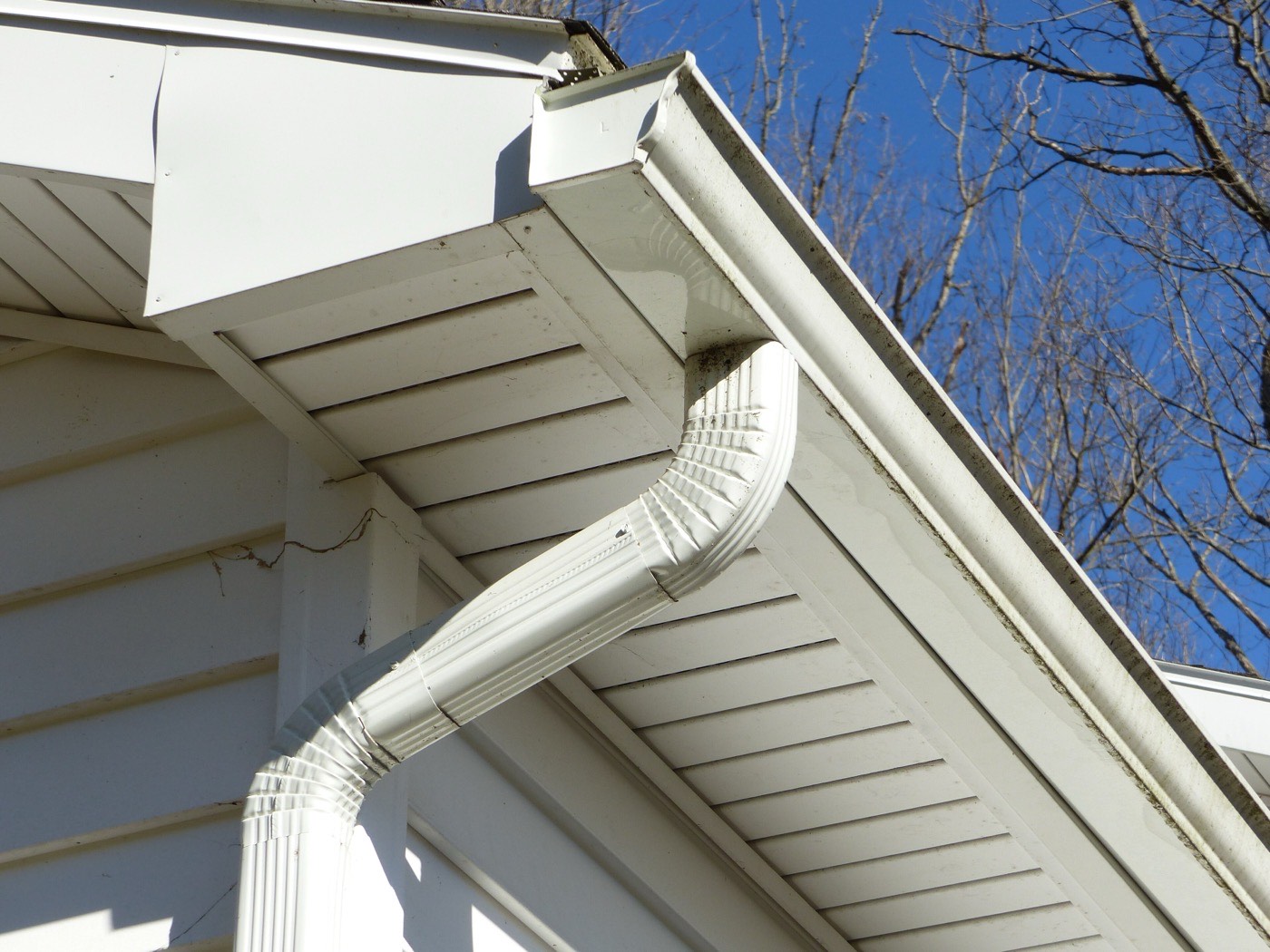
Seamless, formed on site
How a gutter run goes up
A seamless gutter is formed from a coil of aluminum at your house and cut to the length of each run. The only joints are where they have to be: corners, end caps and outlets. Fewer joints, fewer places to drip.
-
Measure and plan the outlets
Every run is measured, and downspouts go where the water can go somewhere useful, not just where they're easiest to hang.
-
Check the fascia and the roof edge
Soft fascia is replaced and missing drip edge or apron is added first. A new gutter on a bad board pulls loose in its first heavy winter.
-
Form each run on site
Prefinished aluminum coil runs through a forming machine at the curb, and each run comes off in one length. Corners and end caps are riveted and sealed.
-
Hang it on hidden hangers
Roughly every two feet, closer under big trees or where snow and ice slide off the roof. A gutter full of wet needles and slush is heavy.
-
Set the pitch toward the outlet
About a quarter inch of fall for every ten feet. Enough to drain, not so much that the gutter visibly tilts along the house.
-
Downspouts, elbows and extensions
Strapped tight to the wall, with each one ending somewhere the water can soak in or drain away.
-
Run water through it
A hose at the high end of each run shows the pitch and every seam before the job is called done.
Get the water away from the house
An inch of rain on 1,000 square feet of roof is about 620 gallons, and all of it comes out of the downspouts. Where they empty matters as much as the gutter. Water dumped at the wall soaks down beside the footing, and that's how crawlspaces and basements get damp.
- Extensions or splash blocks carry water several feet out, 4 to 6 is a common target, onto ground that slopes away from the house.
- Downspouts go where the yard can take the water: not onto a walkway that ices over, not toward the neighbor's side, not into a bed that already stays wet.
- Many older houses here have downspouts that run into a pipe in the ground, to a drywell, a drain line or the sewer. Whether to keep, repair or disconnect one depends on the property and on what the city or county allows. We'll look at where yours go and check what applies before recommending anything.
Clearing is part of it too. Under Douglas firs, a gutter can need attention more than once between October and spring. Our roof maintenance page has a seasonal calendar.
Signs your gutters aren't keeping up
Most of these show up from the ground, and the best time to look is during a real rain. Stand under the eaves with a coat on and watch where the water goes.
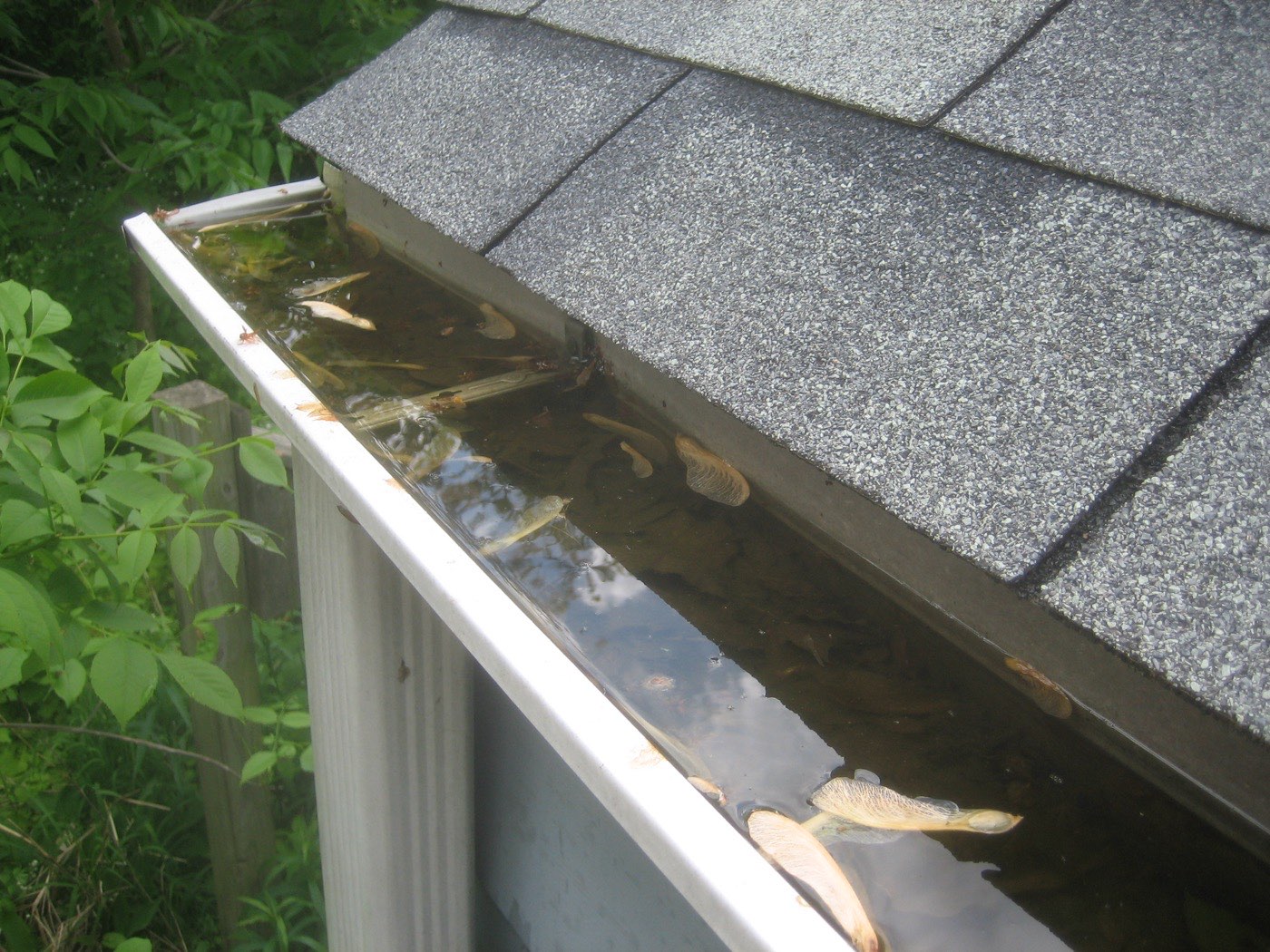
- Water spilling over the front in an ordinary rain
- A clogged outlet or downspout, or a gutter too small for the roof above it.
- Water running down behind the gutter
- A gap between roof and gutter: no gutter apron, or a drip edge that stops short.
- Standing water long after the rain stops
- The pitch is wrong, or a hanger has let go and made a low spot.
- A sagging run, or a gap at the fascia
- Hangers pulled loose, often from rotten wood or a winter's weight of debris and ice.
- Peeling paint or soft wood on the fascia
- Water has been getting behind the gutter for a while. The rafter tails are next.
- Drip lines and water stains on the siding
- Overflow, or a leaking seam or corner, usually at the same spot every storm.
- A trench worn in the bed under the eave
- Water is coming over the edge instead of down the downspout.
- A damp basement or crawlspace, or puddles by the foundation
- Downspouts emptying too close to the house, or an underground line that's broken or plugged.
Other work we do

Roof replacement
Tear-off to deck, new underlayment, flashing and ventilation, and a shingle roof built for a wet Oregon winter.

Roof repair
Leaks, lifted or missing shingles, failed flashing and storm damage, found at the source and fixed to match.
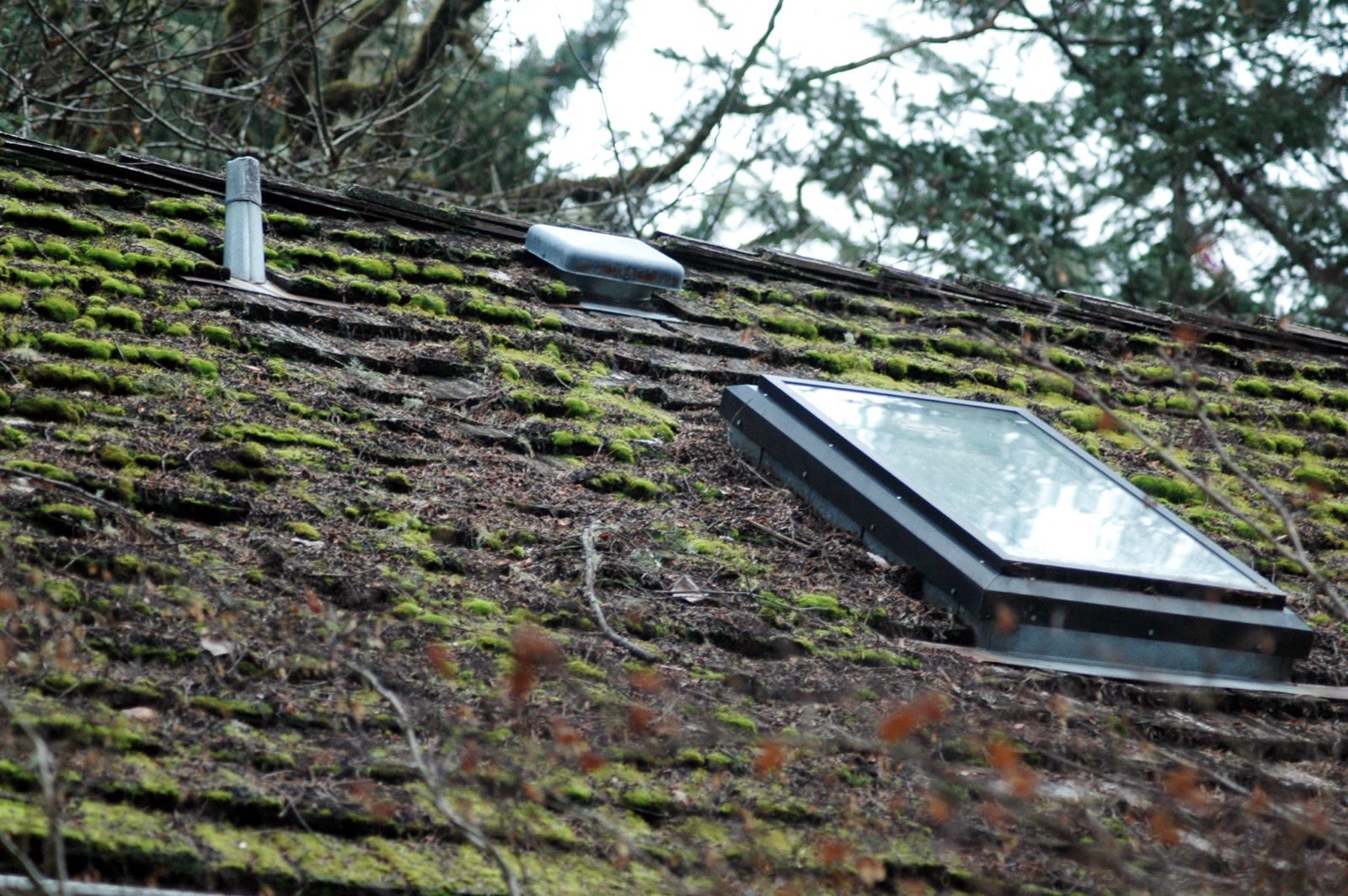
Roof maintenance
Moss treatment, debris clearing and a close inspection, so small problems are caught before they reach the ceiling.
Get your gutters looked at
We'll walk the eaves, check the fascia and the downspouts, and tell you whether it's a cleaning, a repair or a new system. The estimate is free and written down.